Latest posts
-
Why architecture matters to legal services companies who want to use AI

Many firms start the AI conversation in the wrong place. They start with tools. Drafting tools, summarisation tools, research tools, copilots and assistants. Vendors demonstrate impressive capabilities and the conversation quickly becomes about which tool to buy. But the real question is not which AI tool to use. The real question is whether the firm’s…
-
AI oversight at board level: five questions directors should be asking in 2026
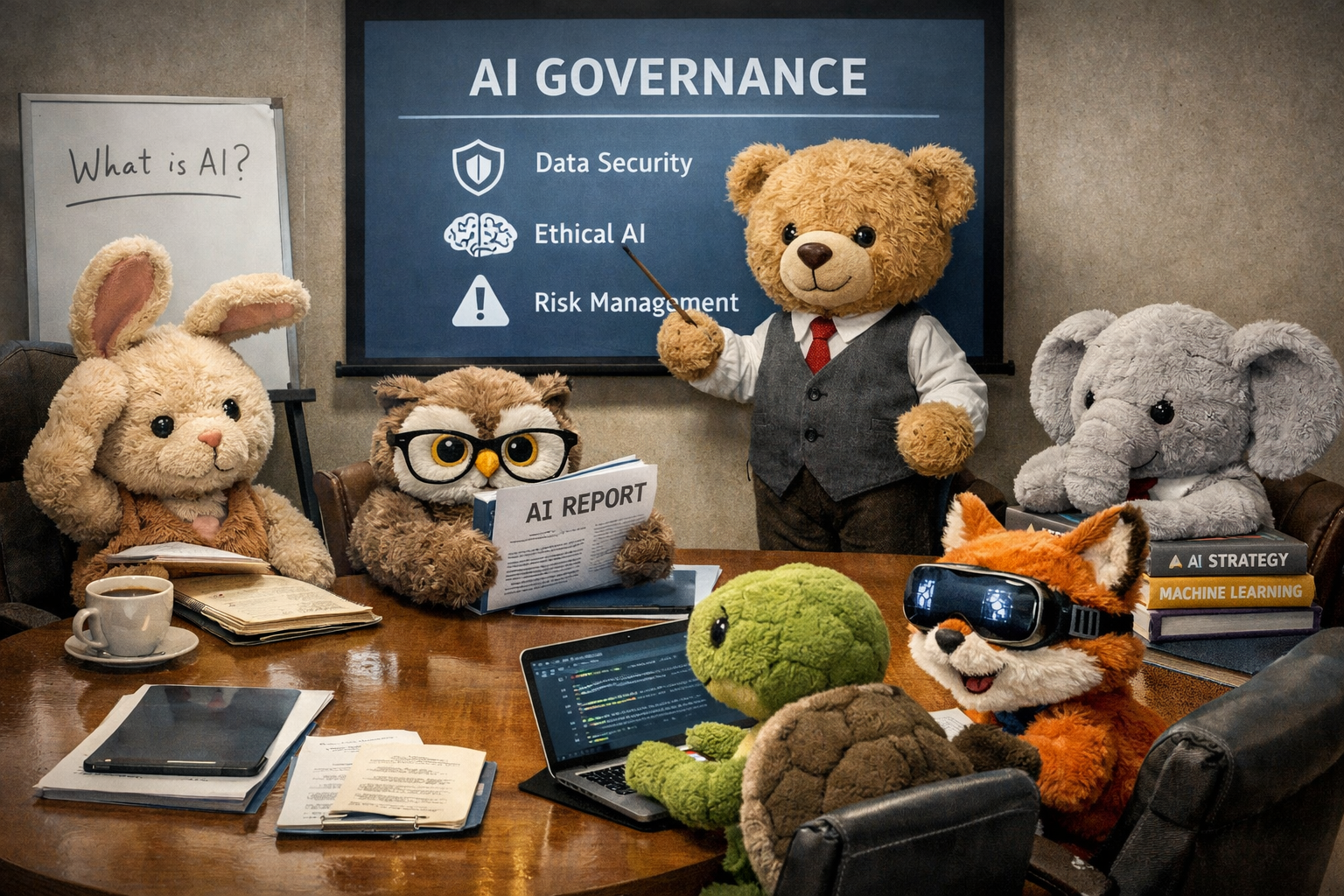
Walk into almost any boardroom today and you will see three very different perspectives on artificial intelligence. One director may not use AI at all and is still trying to understand where it fits into the business landscape. Another may have read about it extensively but has little practical exposure beyond headlines and vendor promises.…
-
When your law firm’s technology holds back growth

Growth in a modern legal practice is no longer constrained by legal capability alone. It is constrained by infrastructure. Partners may be driving new service lines, exploring AI assisted delivery, or responding to client demands for transparency and speed. Yet behind the scenes, many firms are operating on technology estates that have evolved rather than…
-
What Technical Due Diligence now expects to see around AI usage
Artificial intelligence is no longer experimental in UK SMEs. It is embedded in sales workflows, underwriting models, forecasting tools, customer communications and product features. In many cases it has become operationally critical without ever becoming formally governed. That shift matters in due diligence. Traditional technical due diligence has focused on platform scalability, cyber posture, code…
-
The CPTO as AI translator: turning model capability into business decision-making

By the end of 2025, most mid sized organisations are already using AI in some form. Customer support teams are trialling copilots, finance teams are extracting data from documents, and product teams are embedding classification or recommendation into workflows. What has changed is not the presence of AI, but the number of business decisions it…
-
From awareness to control: governing AI in practice in 2026

In our previous article, 2026: Technology and AI – what’s next for UK SME boards?, we argued that AI has now crossed a threshold. It is no longer an emerging technology that boards can safely delegate downward, nor is it a future concern that can be deferred until “things settle down”. AI is already influencing…
-
2026: Technology and AI, what’s next for UK SME boards?

Looking forwards is always harder than looking backwards, but as we move into 2026, one theme is becoming unavoidable for UK SMEs: technology foundations matter again. Not because innovation has slowed, but because AI, automation, and digital services now amplify whatever sits underneath them. Strong foundations accelerate progress. Weak ones magnify risk, cost, and operational…
-
Is Your Tech Stack AI-Ready? A CTO’s Guide to Scalable, Governable Foundations
For all the excitement around generative AI, most organisations are discovering a quieter truth. The biggest breakthroughs rarely come from a single model or vendor, but from the quality of the foundations that the Chief Technology Officer builds beneath them. The question is no longer “Should we adopt AI?” but “Is our technology stack ready…
-
From Engineering to Intelligence: How CPTOs Must Adapt in the AI Era

For most of the last two decades, the arc of technology leadership has been clear: build reliable systems, scale them, keep them secure and resilient, and ensure the product vision is tethered to engineering reality. But the rise of AI has bent that into something much less predictable. Organisations are discovering that the shift from…
-
The Ethics of AI at Board Level: Why Risk Is Not Just a Compliance Issue

AI now appears in almost every board pack I see. It is woven into growth plans, cost reduction exercises, investment cases and talent strategies. Yet, in many organisations, the ethical dimension receives far less attention than the commercial one. Too many boards still treat AI risk as if it were simply a matter of compliance,…